

Photonic Integrated Circuit

Home > Technologies >Photonic Integrated Circuit

Overview

Leveraging its self-developed PIC technology platform, AFR has established a comprehensive technology ecosystem in the field of high-speed electro optic modulator. Adopting an IDM (Integrated Device Manufacturer) development model, the platform has successfully mastered key processes from chip design, wafer fabrication, device packaging, to performance testing, forming a vertical technology chain encompassing "chip–device–module."
Photonic Integrated Circuit
  • Applications
    AI Computing Networks
    Hyperscale Datacenters
    Long-Haul Backbone Communication
    LiDAR
    Satellite Communication
  • Material Systems
    Bulk Lithium Niobate
    Thin-Film Lithium Niobate
    SOI (Silicon-on-Insulator)
    SiN/SiON
    Heterogeneous Integration
Capabilities
  • Chip Design
    Chip Design
    We offer a complete PIC design framework for passive components and high-speed electro-optic modulators. Standardized PDKs ensure precise alignment between design targets and manufacturing processes for fast, reliable product iteration.
  • Wafer Fabrication
    Wafer Fabrication
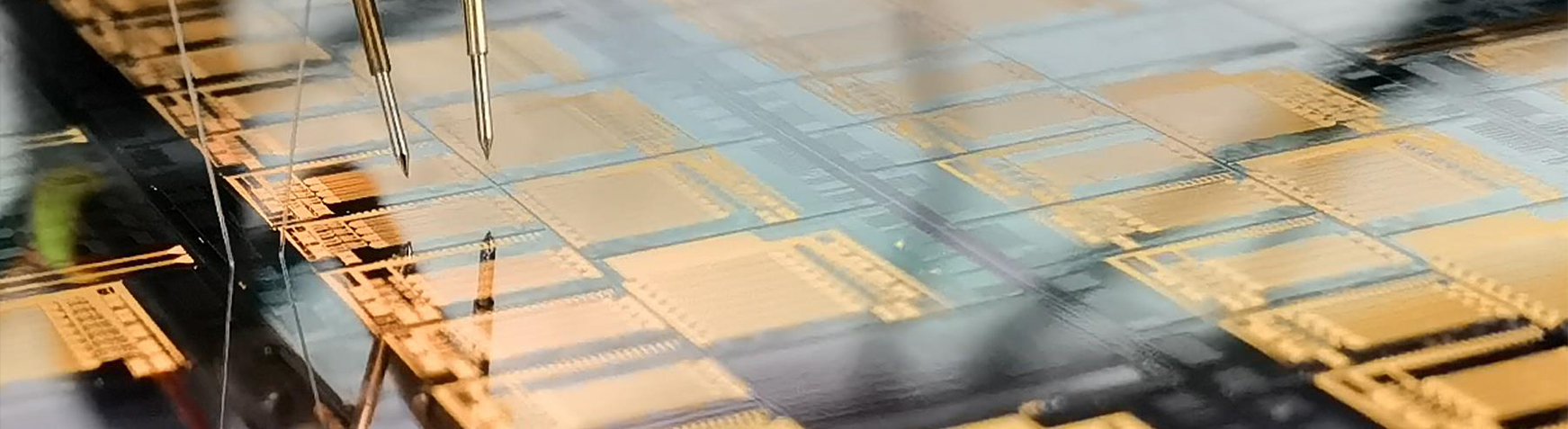
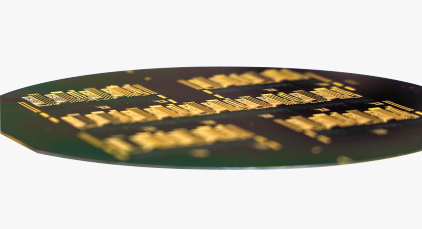
    Our Zhuhai and Milan fabs support 4-inch and 6-inch wafer manufacturing for PIC platforms. Key processes include e-beam lithography, advanced etching, and thin-film deposition, ensuring stable yield and high process consistency.
  • Device Packaging
    Device Packaging
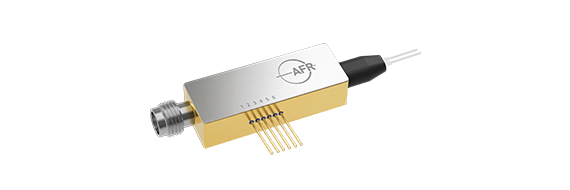
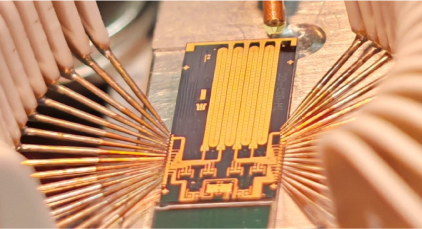
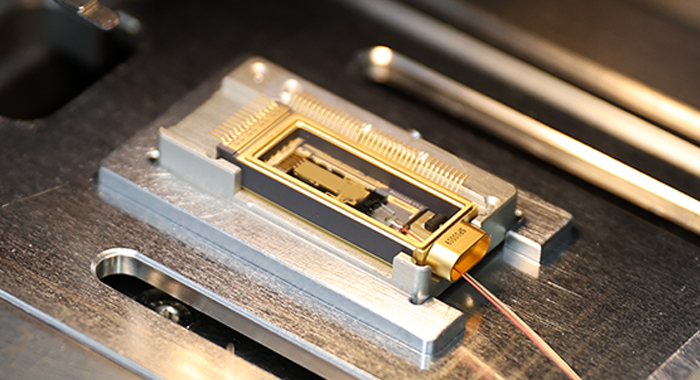
    We specialize in high-frequency packaging with differential routing, flexible RF PCBs, and precise alignment. Our advanced wire bonding and hermetic sealing deliver durable packaging for electro-optic modulators in demanding environments.
  • Automated Testing
    Automated Testing
    Our automated testing platform spans wafer, chip, and device levels, supports high-speed measurements up to 130G Baud, performs long-term reliability and stability tests, and uses data analytics for precise quality evaluation and traceability.

Thin-Film Lithium Niobate

Thin-Film Lithium Niobate (TFLN) wafers are fabricated by slicing and bonding a thin layer of single-crystal lithium niobate onto a silicon or quartz substrate with a buffer layer. This platform leverages standard semiconductor micro-nano fabrication to achieve wafer-scale integration. Compared to alternative material systems like indium phosphide (InP) and silicon photonics (SiPh), TFLN offers the following advantages: a broad transparent window, low optical loss, negligible nonlinear effects, and superior high-speed electro-optic modulation performance.
Photonic Integrated Circuit
Comparison of Material Technology for Optical Devices
Optical LossMax. BandwidthHalf-Wave Voltage VπExtinction RatioChip LengthLinearityIntegrationCost
LiNbO3
InP
SiPh
TFLN

Excellent

Excellent

Excellent

Excellent

Medium

Excellent

Medium

Medium

Heterogeneous Integration

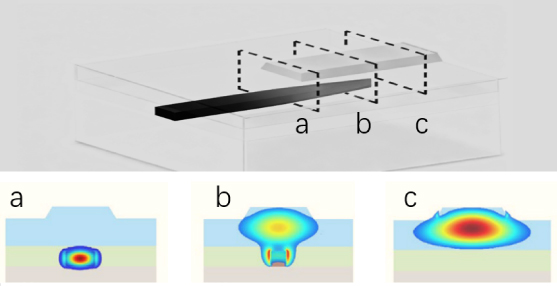
The platform enables the development of heterogeneously integrated products that incorporate silicon, silicon nitride, and thin-film lithium niobate. By leveraging the synergy between these materials, it realizes low-loss, low-drift, and multi-functional Photonic Integrated Circuits for applications in high-speed coherent communications and datacenters.
Photonic Integrated Circuit
Core Technologies
  • Low-Loss vertical inter-waveguide coupling
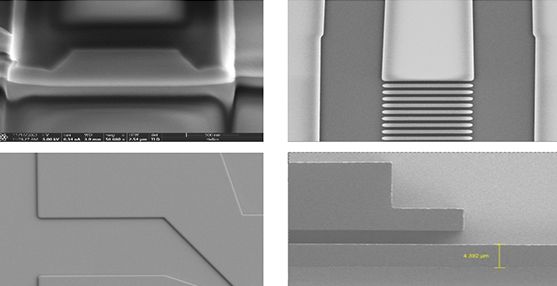
    Low-Loss vertical inter-waveguide coupling

  • Lithium niobate and electrode processing specialized for 4"/6" heterogenous wafers

    Lithium niobate and electrode processing specialized for 4"/6" heterogenous wafers

  • Wafer dicing and polishing specialized for 4"/6" heterogenous wafers

    Wafer dicing and polishing specialized for 4"/6" heterogenous wafers
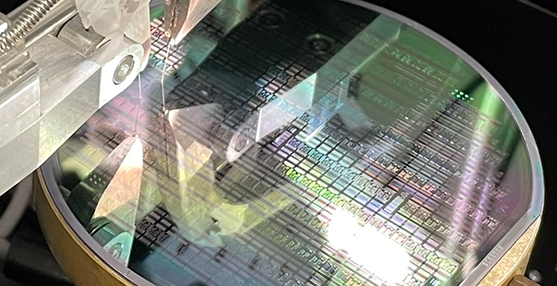
  • Wafer and chip testing specialised for 4''/6'' heterogenous wafers

    Wafer and chip testing specialised for 4''/6'' heterogenous wafers